This content is brought to you by Central Provident Fund Board Singapore.
When I met my husband, I thought he was the perfect piece to my puzzle of life. He seemed to fit into every aspect faultlessly, from his personality to his financial habits.
Growing up, I have always been careful with money.
When I got my first job, my goal was simple: save my first $10,000, before anything else. That meant sitting out on friend trips and even saying no to things I wanted but didn’t need. I trained myself to not rely on spending to make myself feel better. It definitely wasn’t always easy, but I told myself that every dollar saved today would work harder for me later. Additionally, I could also buildup my emergency fund much quicker.
So, when it came to relationships, I naturally gravitated towards someone who I thought felt the same way about money. And for a long time, I really believed we were on the same page.
We split expenses fairly, saved aggressively for our Build-To-Order (BTO) flat and small wedding, and even worked out that he would contribute more to the mortgage since he earns more.We also calculated our combined Central Provident Fund (CPF) Ordinary Account savings to understand how much we could use for our BTO.
Going through all of this together made me feel that life with him was going to be light and breezy, and we had this whole adulting thing figured out. Or so I thought.
The uncovered cracks between us
I thought our outlook towards money was aligned, but the more time we spent together, the more differences I noticed in the ways we handled money. But to understand how we got here, let me take you back.
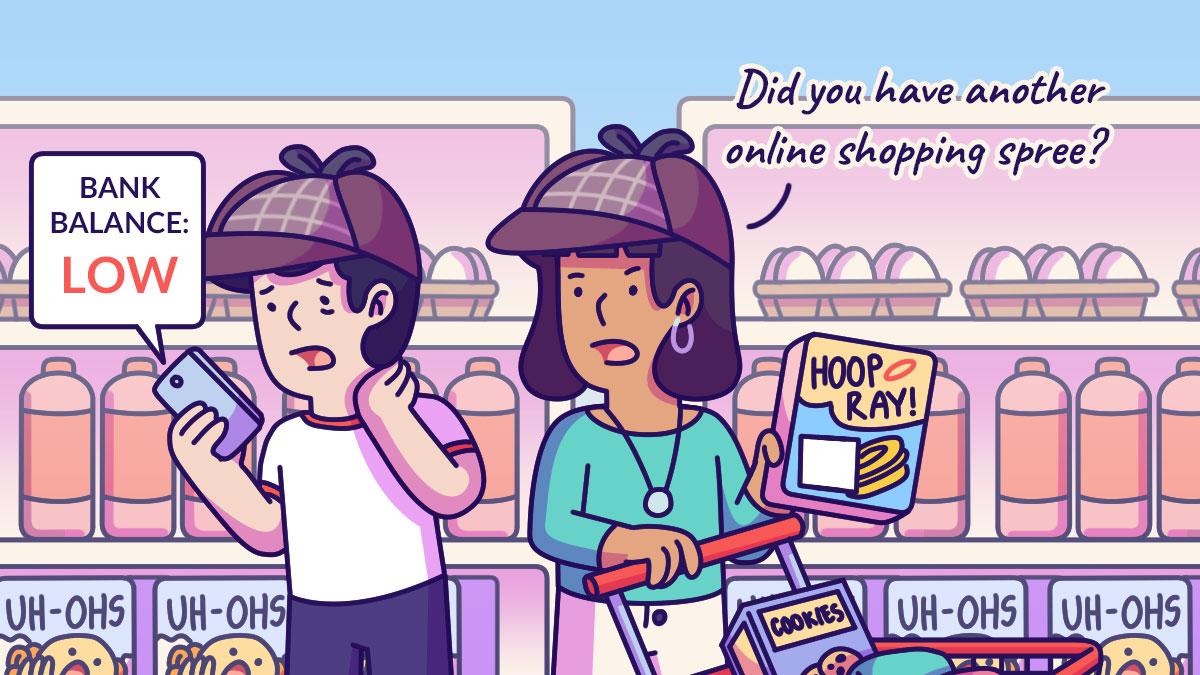
When we first started dating, my husband, then boyfriend, was not earning as much as I did, so he would save as much as possible by refraining from buying things he liked. But after he secured a higher-paying job that boosted our combined income, he became much more relaxed about spending.
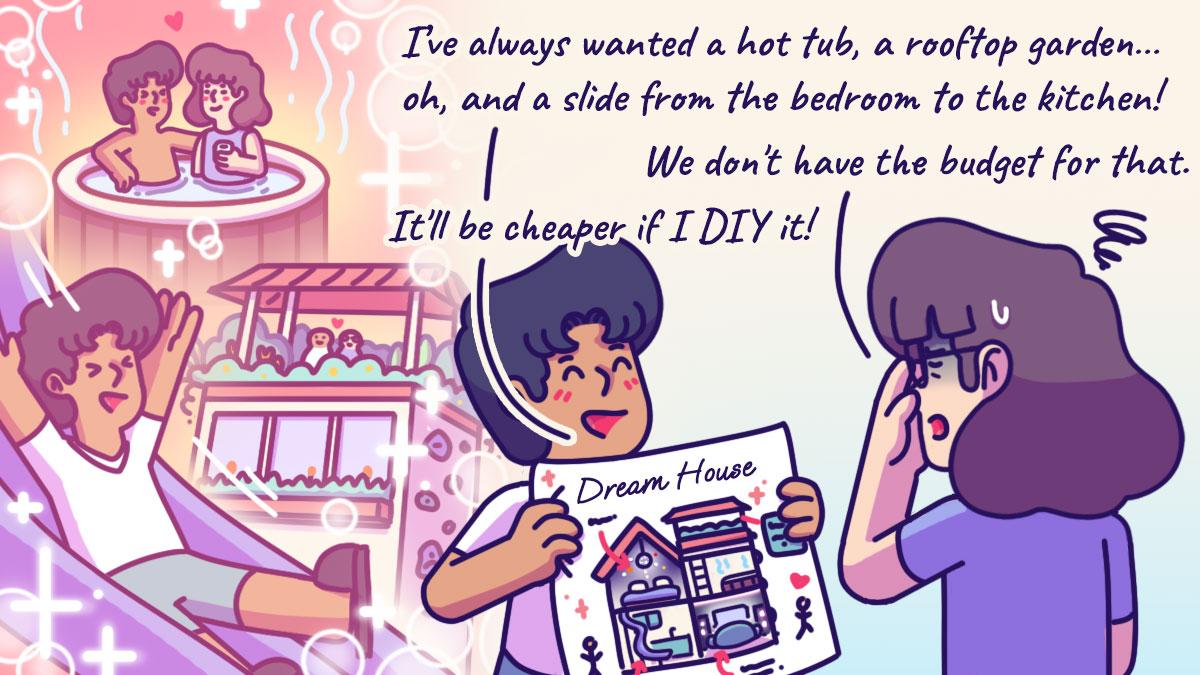
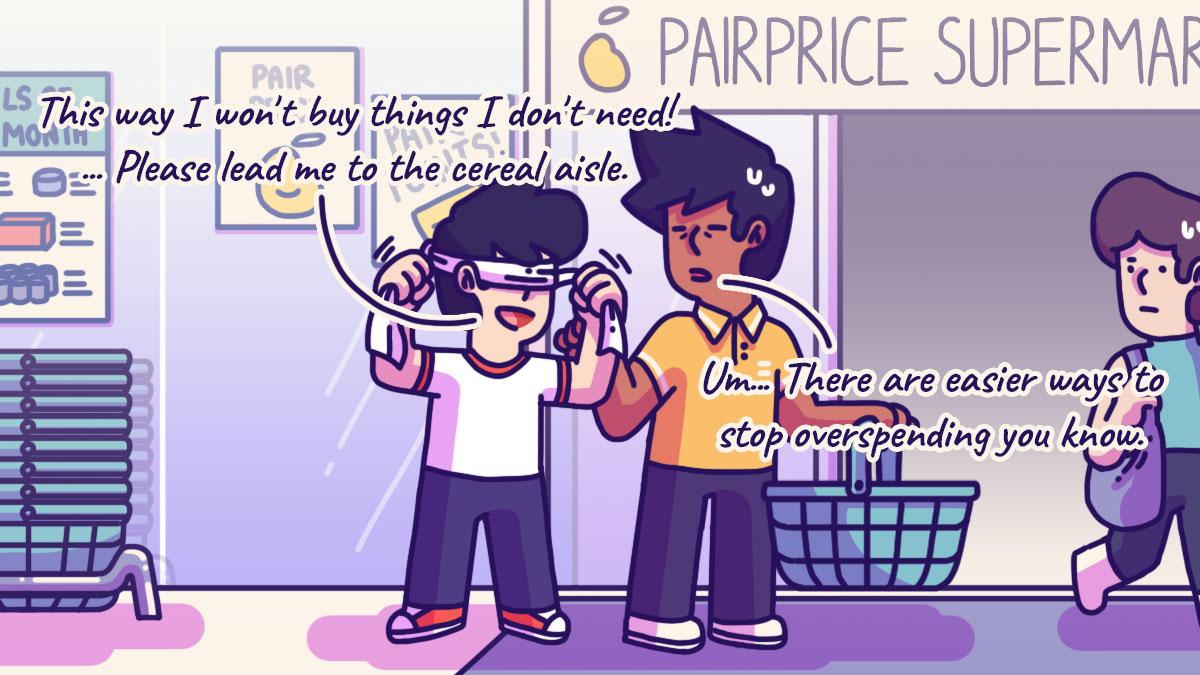
Don't get me wrong, I was happy for him. He deserved this with the amount of effort he put into his work. However, I was having a hard time accepting some of the things he bought, because I just could not see the value in them.
After allocating part of his salary to savings and expenses, my husband would spend the remaining money on collectibles, such as soft toys or figurines. Initially, I felt slightly frustrated with him, since we could have used that extra money to fund our wedding or grow our investments.
"Soft toys and figurines don't have value. They are just for looks!" That's what I thought.
Perhaps it was my scarcity mindset talking, but I wanted to have a bigger safety net in case things went south.
So, I decided to have a talk with him—a real talk about our spending habits, our mindsets, and what our long-term goals are together.
That was when I discovered that despite being on the same page about splitting expenses and larger life goals, we had fundamentally different money mindsets. He believed in living in the moment while still being responsible. I was the opposite; I preferred to find enjoyment only after I had everything checked off: a six-month emergency fund, a house, and a stable income to fall back on.
My husband explained that while I couldn't see the value in the things he bought, he was happy with his rare collectibles. They gave him a sense of nostalgia and identity, as he had grown up with these characters.
Understanding his perspective made me realise that financial responsibility doesn't mean cutting out everything that brings joy. Since he was already consistently meeting our shared savings goals, I learned to be comfortable with him setting aside $250 a month for his collectibles, and it was a great reminder for me to allow myself some room to enjoy the present, too.
As we plan for our future
Our conversation made me realise that while we had learned to work through our differences in spending, there were still gaps I didn’t notice despite being together for a while. It made me wonder whether our visions for the future were truly aligned, so I asked him what his ideal retirement lifestyle would look like.
It turned out we had never really thought about our retirement together. He assumed he would work until 65, while I had always imagined retiring at 55 and maybe picking up part-time work on the side.
There was a 10-year retirement gap between us, which may cause some financial tensions if I were to retire early. He would be the sole breadwinner, while I would have plenty of free time on my hands. It would also be difficult to travel since he would still be tethered to his work.
Furthermore, that would mean that I would have to save more money for my CPF funds during my 30s and 40s, instead of using the money for travel and leisure. But instead of forcing the other person to back down, we decided to be realistic and look at the numbers.
Addressing the ‘shortfall’ to retiring early
To understand what our retirement plans might look like financially, we turned to the CPF Retirement Payout Planner.
We started with setting our payout goal, where the planner helped us estimate how much our desired retirement lifestyle would cost every month.
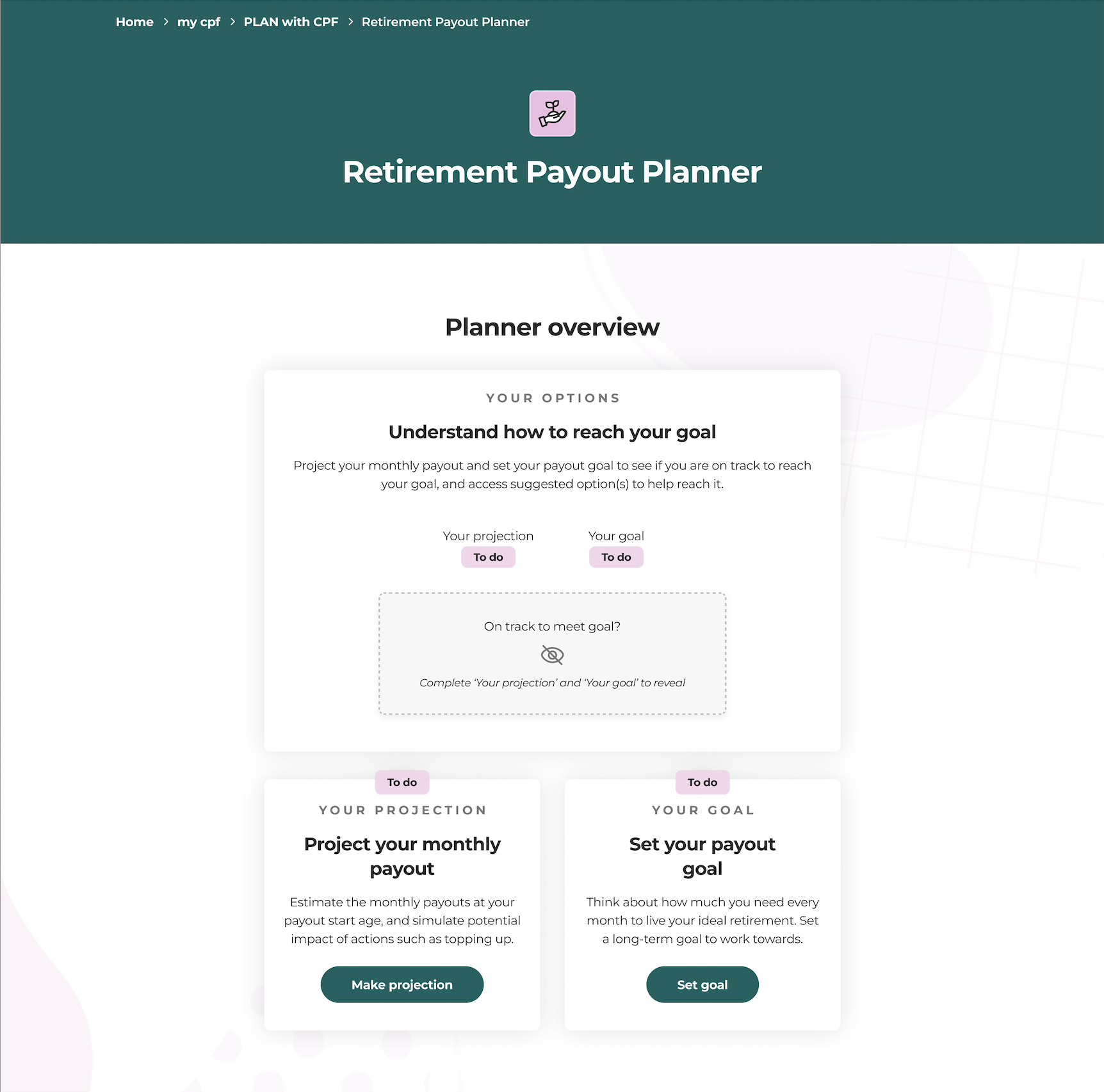
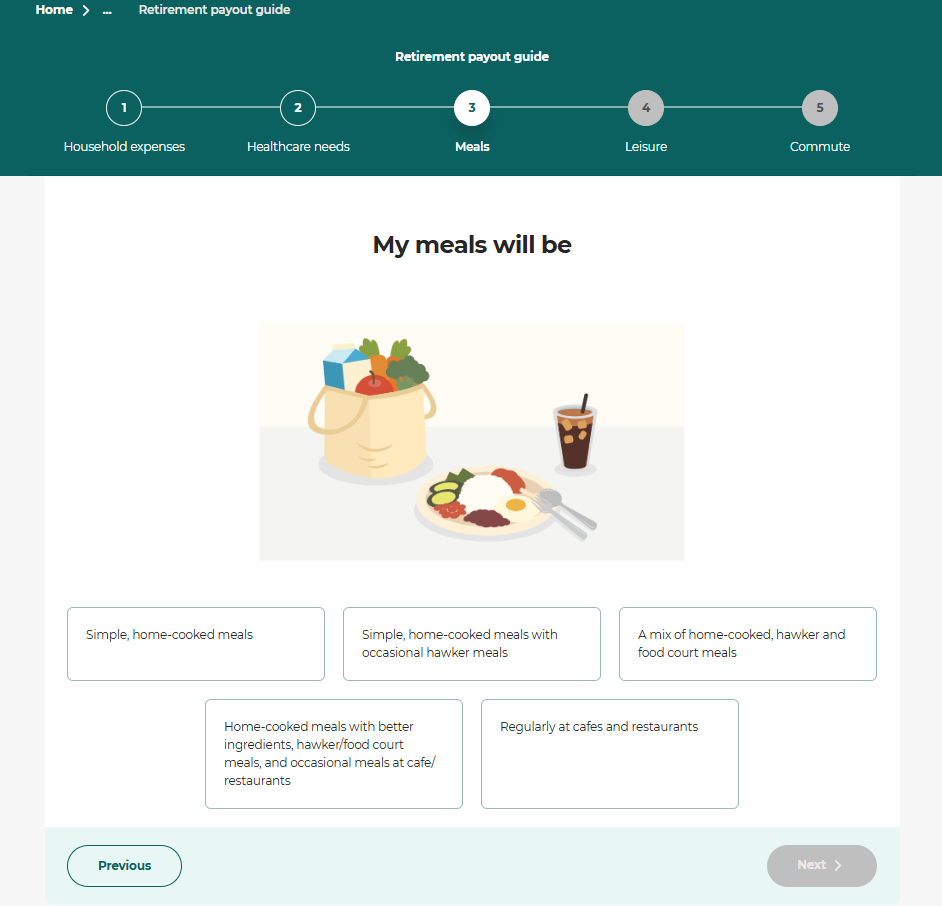
Using the CPF Retirement Payout Planner
With the planner’s retirement payout guide, we were able to estimate how much we would need every month for our desired lifestyle. By answering questions on my lifestyle choices like dining, transport, and occasional leisure, the guide estimated a monthly payout goal of around $2,000, enough for me to maintain my current lifestyle, without too much compromise. After factoring in 2% inflation, my monthly payout goal became $3,770.
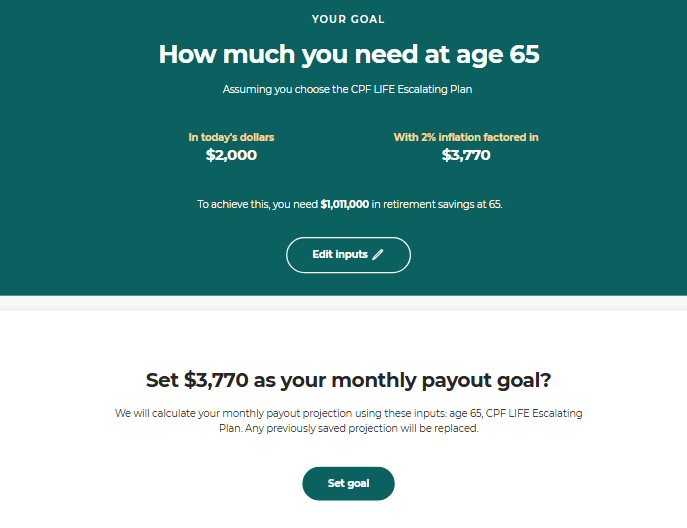
Calculated using the CPF Retirement Payout Planner
For my husband, the planner painted a similar picture. His ideal monthly payout goal of $3,000 at 65 in today’s dollars looked different once the 2% inflation was factored in. This meant he would need around $5,230 a month when he retires to maintain the same lifestyle.
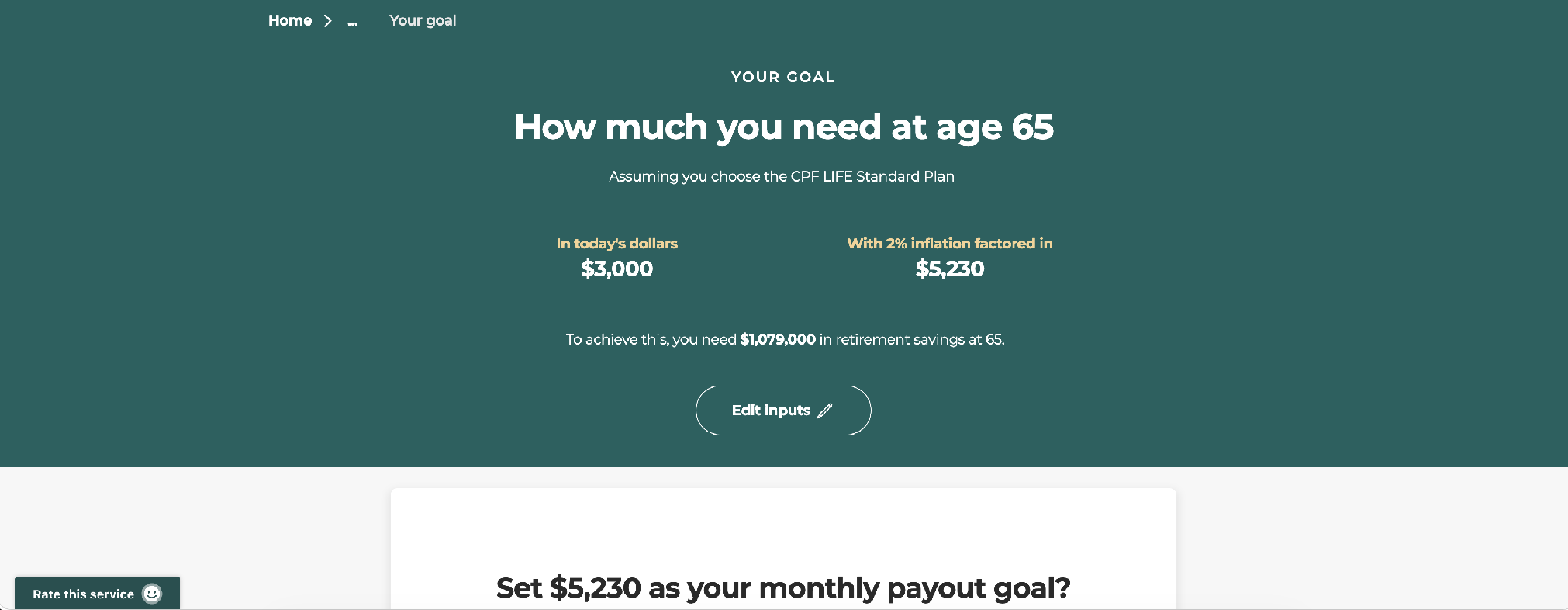
Calculated using the CPF Retirement Payout Planner
After setting our target monthly payout, we proceeded to project our estimated monthly payouts based on our current CPF savings and expected income. The projection also takes into consideration the age we want our payouts to start and the type of CPF LIFE plan that would best suit our lifestyle.
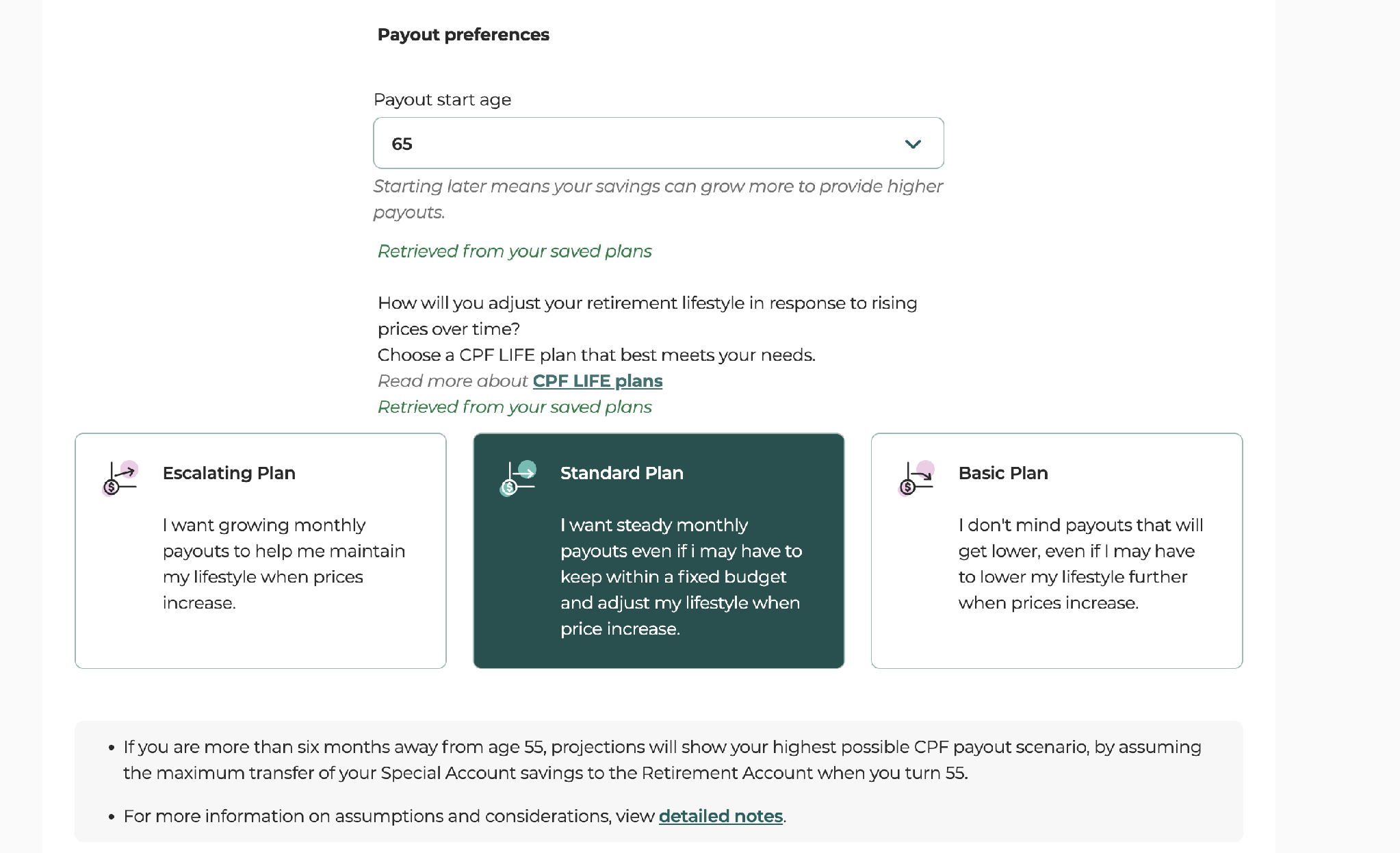
It was a wake-up call for both of us—the gaps between our target and projected payouts were bigger than we thought. While saving for our BTO was our most immediate priority, retirement will be the next joint milestone we’ll need to plan together. The planner gave us a clearer picture of where we stand today and exactly how much of a gap we need to bridge.
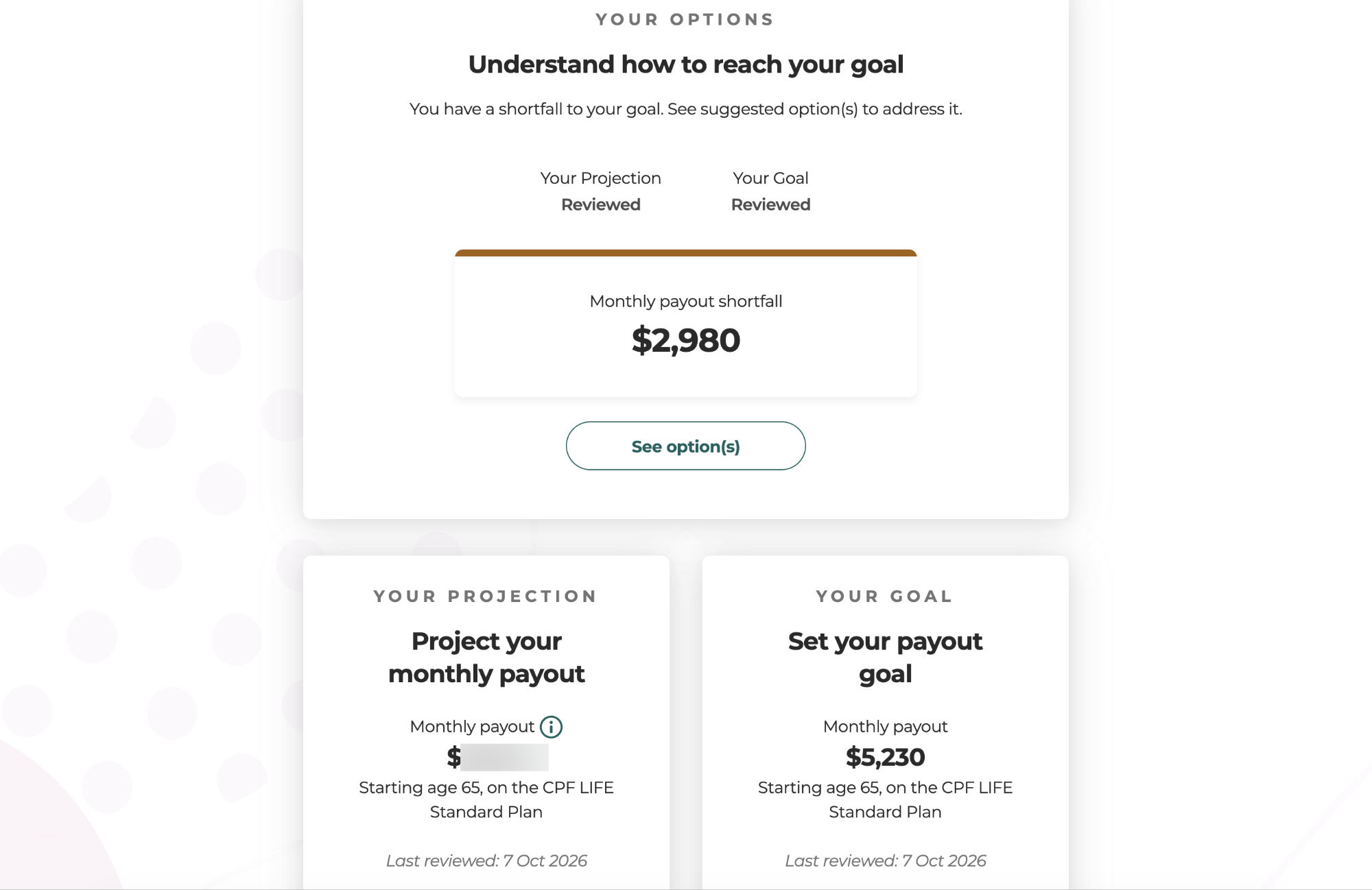
Calculated using the CPF Retirement Payment Planner
Seeing the numbers laid out so plainly was unexpected, to say the least. However, my husband sensed my anxiety and reassured me that we are in this together.
To address this shortfall, we explored the simulation options in the planner to see how different steps could help close the gap. The planner visually showed us the direct impact of making regular voluntary cash top-ups to our Special Account (SA), allowing our money to grow faster through compound interest.
Based on those visualisations, we decided that once we’re settled in our new BTO flat, we will make monthly voluntary cash top-ups to our SA while adjusting my target retirement age from 55 to 60. We can then also figure out a balance between travelling and saving for retirement.
Despite our differences, this conversation taught me that retirement planning isn’t just a personal exercise anymore. It’s something you build together. And I’m glad my husband is someone I can turn to when navigating financial concerns.
Having money talks with your significant other can be stressful, but they are worth it. It is not just about setting shared goals, like investing or buying a house, but about discussing the kind of retirement lifestyles you want to build together and the actions you can take to achieve them.
This content is brought to you in collaboration with Central Provident Fund Board Singapore
Start planning your retirement lifestyle using the CPF Retirement Payout Planner to get a clearer picture of your finances and the future you're building.
Wish to learn more? Join CPF at the Ready for Life Festival, where you can explore interactive roadshows packed with practical tips and CPF tools to support your retirement plans. Whether you’re just starting out or building towards the retirement you have envisioned, there’s something for you.
Upcoming events:
November 2026
20-22 Nov (Fri-Sun)- Roadshow at Northpoint City, South Atrium, Level 1