Disclaimer: The information presented reflects personal research and observations and is intended for informational purposes only. It does not constitute any recommendations to buy or invest in any particular asset class.
Geopolitical events are one of the main variables that can disrupt the market and cause short-term volatility for investors. It is difficult to predict what the market currently favours, leading to sharp reactions.
Currently, we are witnessing a geopolitical event unfolding in real time - the Middle East conflict involving the United States (US), Israel, and Iran. The conflict, which began on 28 February, has since sent shockwaves throughout the global markets.
Not only has the conflict led to a humanitarian crisis, the consecutive closure of the Strait of Hormuz has also disrupted the global oil trade, significantly impacting oil prices everywhere. This, in turn, has made the conflict into a real-life case study of what assets are more vulnerable and which can thrive in these uncertain times.
Based on my research, here are some asset classes that have been performing in the wake of the Iran conflict. These results show how the market reacted in the three days after the first strike on Iran, as measured up to March 2.
1. Defence stocks
Defence stocks have been showing strong performance this year.
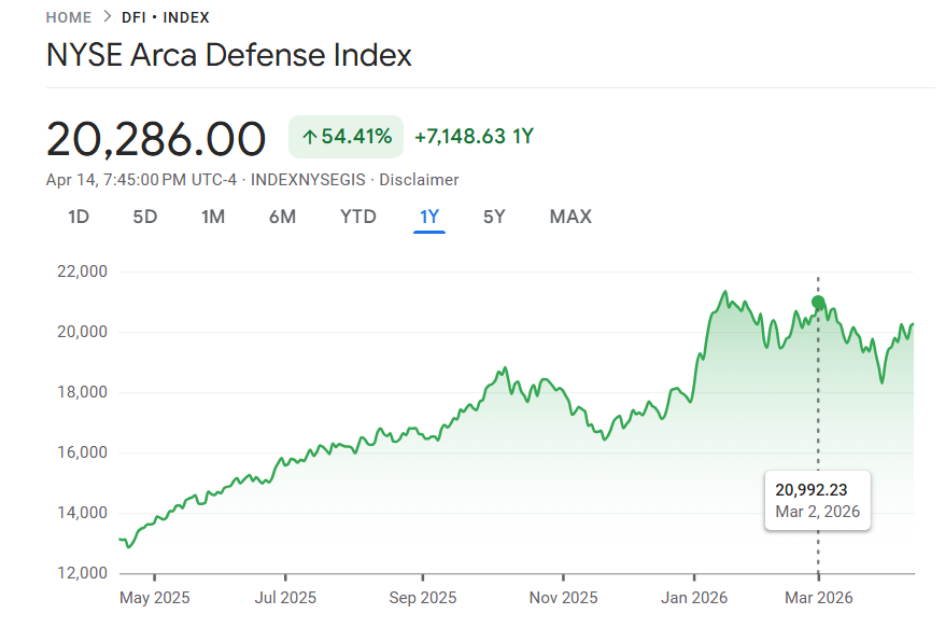
Based on the NYSE Arca Defense Index, which tracks the performance of defense and military-related companies, the sector began to show an upward trend around December 2025, suggesting that investors may have been anticipating rising geopolitical tensions between the US and Iran.
This is what investors like to call a “buy-on-rumor" reversal, or also known as "buy the rumor, sell the news". It is a market phenomenon in which an asset price rises in anticipation of an upcoming event but drops once the event occurs.
Therefore, you can see a decline a few days after the first strike on Iran. This is likely because some investors began selling to lock in profits after the index’s strong run.
Although its performance weakened post-Iran first strike, the index still surged more than 150% between 2020 and 2025, leaving the sector at high valuations and relatively expensive to buy in.
2. Precious metals
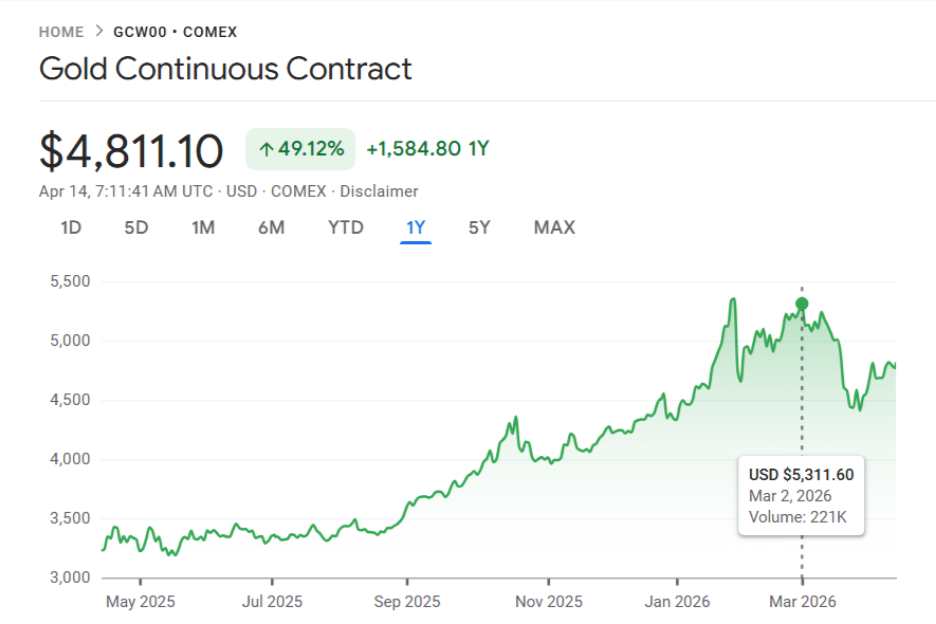
Before the Iran conflict, gold prices had surged more than 40% in the short span of less than two years. According to JP Morgan, factors such as trade concerns, reduced demand for the US dollar, and increased central bank buying contributed to this upswing.
On Mar 2, three days after the first strike on Iran, gold saw a jump from around US$5,100 to over US$5,400 per troy ounce, marking an increase of more than 6% in just a few days.
Historically, precious metals such as gold and silver have seen bigger jumps during past conflicts. For example, gold rose by around 70% during World War II (1939-1945), and 16% during the 2014 Crimean crisis.
Yet during the Iran conflict, gold has remained unexpectedly steady. According to James Meadway, a council member of the Progressive Economy Forum, speaking to Al Jazeera, he said that this may be because gold had already been performing strongly at the start of the year, making it less reactive to the war.
3. Oil & gas companies
The Strait of Hormuz is a major shipping corridor that transports over 20% of the world’s oil consumption, as well as significant volumes of liquefied natural gas and fertilisers. Due to its strategic importance, any closure or disruption can severely affect the flow of these commodities. This situation leads to higher prices for consumers and, in turn, potentially higher profit margins for energy companies.
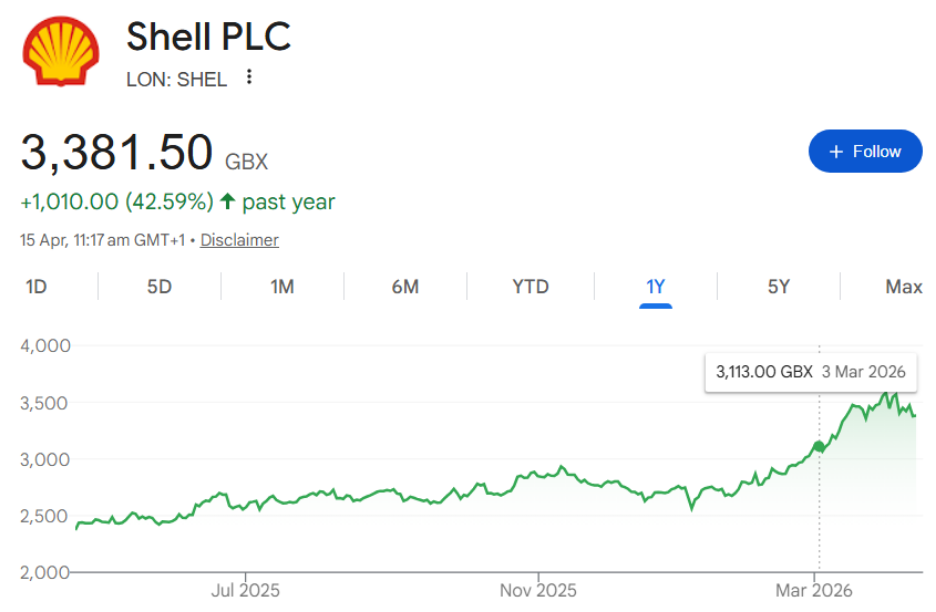
With the increased price of crude oil, several energy stocks have been thriving during the disruption. One of the world’s major oil giants, Shellhas already experienced a 13.3% surge between 27 February and 27 March.
This has been historically observed, as energy companies tend to perform well when there are supply disruptions in the Middle East. For instance, the 1973 Yom Kippur War caused oil prices to rise sharply by over 400%.
4. Renewable energy companies
With oil supply being squeezed, many countries are scrambling to secure alternatives to mitigate the shortage. As a result, investors are turning to companies specialising in renewable energy, such as solar and hydroelectric power.
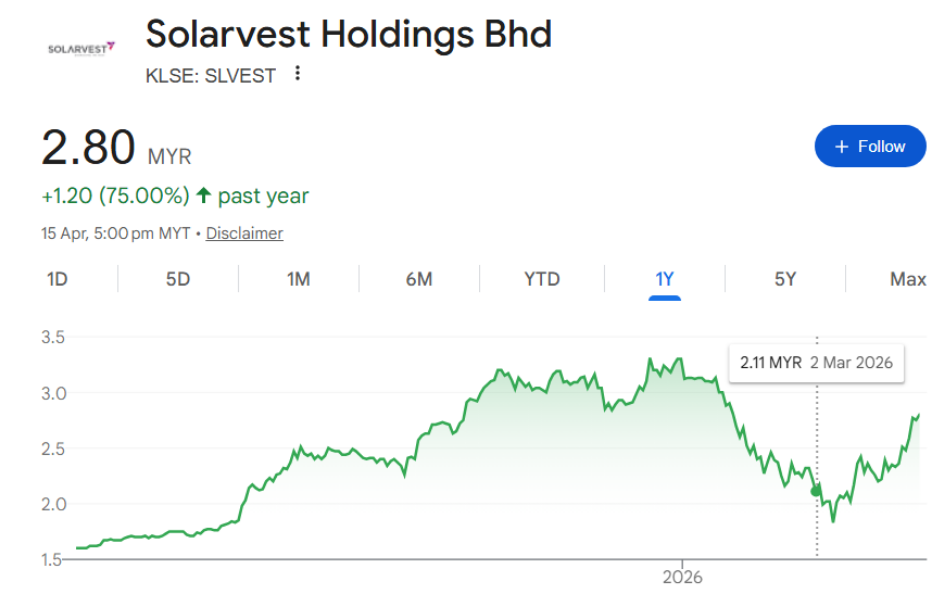
An example is Malaysian firm Solarvest Holdings Bhd experiencing a rise in demand for renewables. It had just announced two large solar projects with the nation’s leading utility company, Tenaga Nasional Berhad to supply energy to semiconductor company Micron Technology Inc plants in Penang and Muar, as well as the data centre arm of NTT Inc and Texas Instruments Inc’s local operations.
Consequently, Solarvest shares climbed as much as 3.3% on April 15, bringing their gains to around 28% since the start of the Iran conflict.
The reason as to why clean energy stocks do not get an immediate wartime boost, as compared to oil companies, is that most renewable energy is contract-based. While oil is continuously traded and repriced, renewable energy sources like solar and wind are typically priced via long-term contracts, which can take longer to be reflected in the market.
Given how sensitive oil prices are to geopolitical tensions, it is understandable that many countries are now turning to alternative energy sources to avoid any more supply disruptions in the future.